Services / On-Site Roll Forming & Custom Panels
On-Site Roll Forming & Custom Panels - Kirksville, Macon & Northeast Missouri
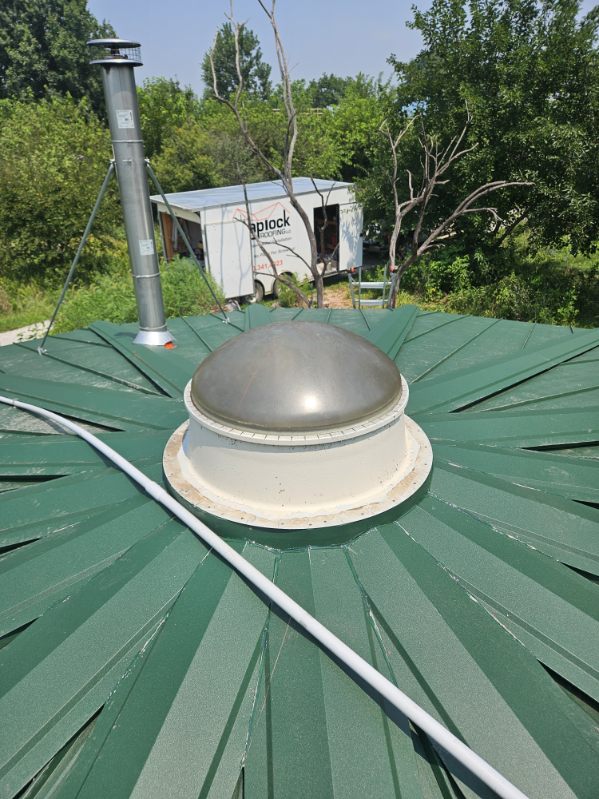
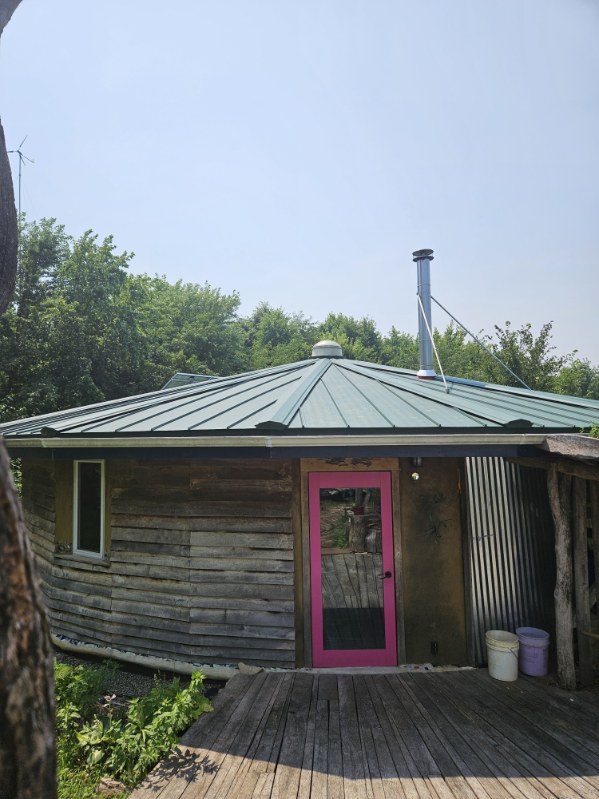
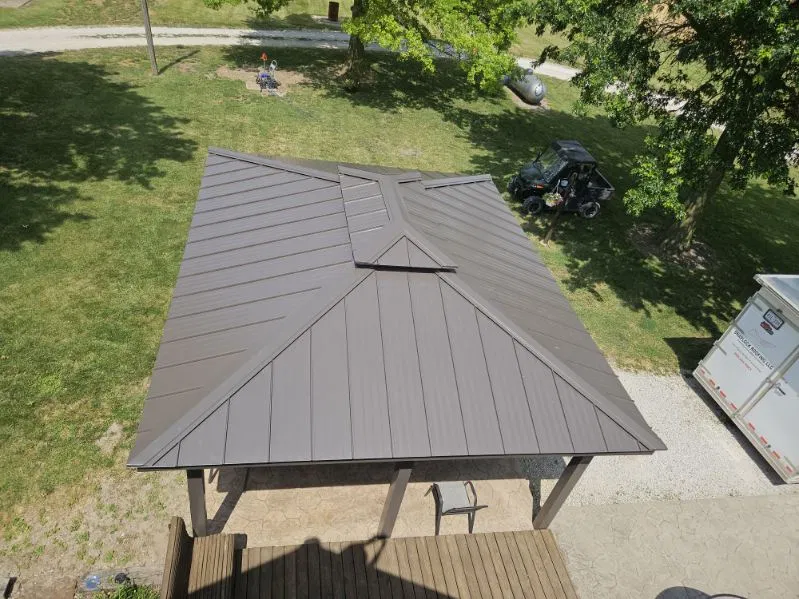
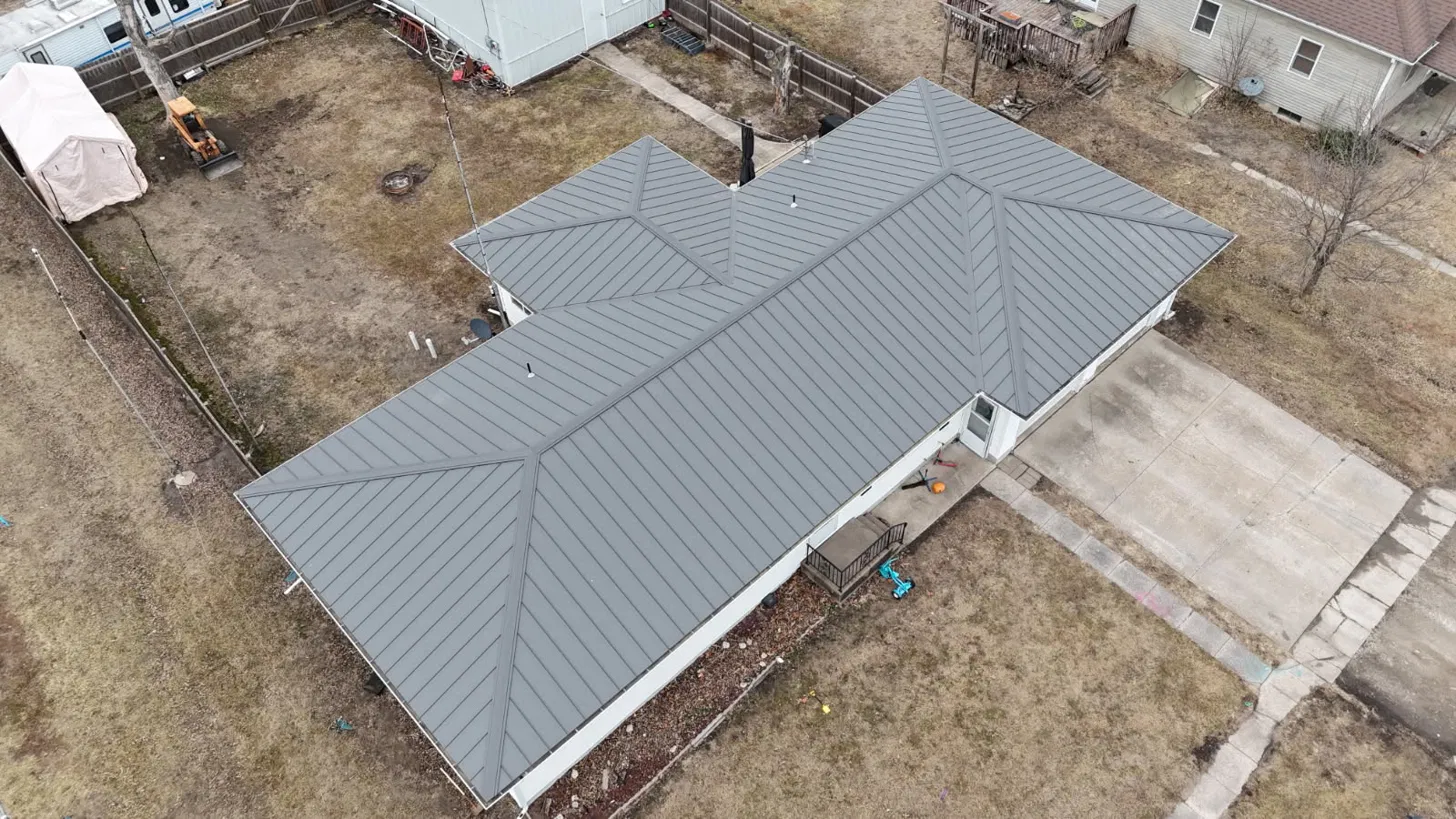
This is the one thing that makes us different from almost every other roofer in this region. We do not order your panels from a factory and wait for them. We bring a portable roll former to your property and make every panel from raw steel coil, right there on the job site. If you are comparing us to another roofer, this page is what you should read, because it is the part that actually changes how the roof performs.
Almost every other roofer in northeast Missouri orders panels that were made in a factory, shipped on a truck, and cut to a standard length. We do it the other way, and the reason is not a gimmick — it is that the way a panel is made changes whether it leaks, how long it lasts, and how long you wait.
How a Portable Roll Former Works
A roll former is a machine that takes a flat coil of steel and runs it through a series of roller stations, each one bending the steel a little more, until it comes out the other end as a finished standing seam panel — with the seams already formed. It is the same process a factory uses. The difference is that ours is portable, so the factory comes to your property instead of your panels going to it.
Raw coil is a flat roll of painted steel — the same material a factory panel is made from. We bring the coil to your job, feed it into the machine, and run a panel at whatever length the roof calls for. We cut it to the actual run, not to a standard length. The panel comes off the machine, goes up on the roof, and runs from the ridge to the eave in one continuous piece.
Because the panel is made on site, it never rides on a truck as a finished panel — so there is no shipping damage and no transport creasing. And because we form to length, there is no factory lead time. Nobody waits weeks on a panel order. Once you are on the schedule, we bring the steel and the machine.
Where On-Site Roll Forming Matters Most
It matters most on long runs and complicated rooflines — exactly the roofs that are hardest to do with factory panels. A factory panel comes in a fixed length, so on a long rafter it has to be spliced: two panels overlapped partway down the run. That overlap is a lap seam, and lap seams are where retrofit metal roofs leak. Because we form to length, we make the panel the full distance and skip the splice.
It matters on awkward angles, too — hips, valleys, dormers, roofs with a lot of penetrations. Anywhere a factory panel would have to be cut and seamed across the run, we can form a panel that fits in one piece.
What It Does Not Change
On-site roll forming is not a substitute for a solid deck, good underlayment, proper flashing, and correct ventilation. If any of those are wrong, the panel being formed on site will not save the roof. We do the rest of the job right because the panel is only one part of it.
And it does not change the weather. A roof still has to be installed in conditions that let it perform. What it does change is the leak risk from seams, the damage risk from shipping, and the wait for a panel order.
How Roll Forming Affects the Cost
Forming on site does not add a factory markup or a shipping line to the job, and it removes the factory lead time. The things that still drive the cost are the same as any metal roof — roof size and complexity, valleys and penetrations, pitch, tear-off versus going over one layer, panel profile, and trim. We do not quote a number on a website; we come look and give you a written quote.
See What It Costs for the full breakdown of how we quote.
On-Site Roll Forming — Common Questions
What is a roll former, in plain terms?
A machine that takes a flat coil of steel and bends it, stage by stage, into a finished standing seam panel. It is the same process a factory uses — ours is just portable, so we run it on your property.
What is 'raw coil'?
A flat roll of painted steel — the same material a factory panel starts as. We bring the coil to your job and form it into panels on site. Nothing about the steel itself is different from what a factory would use.
Why does a continuous panel leak less?
Because there is no joint across the run. A lap seam — two panels overlapped partway down the roof — is a place water can get in, especially on a retrofit over another roof. A panel that runs ridge to eave in one piece does not have that joint.
Can you make any length?
Within the practical limits of the roof and transport of the coil, yes. We cut each panel to the actual run it is going on, including long runs and awkward angles that a factory panel would have to be spliced across.
Does forming on site delay the job?
The opposite — it removes the wait. There is no factory lead time, because we are not ordering panels. We bring the steel and the machine and form as we install.
Where We Work
Based in Knox City, Missouri, we travel roughly a 50-mile radius across northeast Missouri. On-Site Roll Forming & Custom Panels is available throughout our service area.
Ready to talk about your roof?
Tell us about the roof and we'll come look at it. No pressure, no factory lead time.