Services / Standing Seam Metal Roofing
Standing Seam Metal Roofing in Knox City & Northeast Missouri
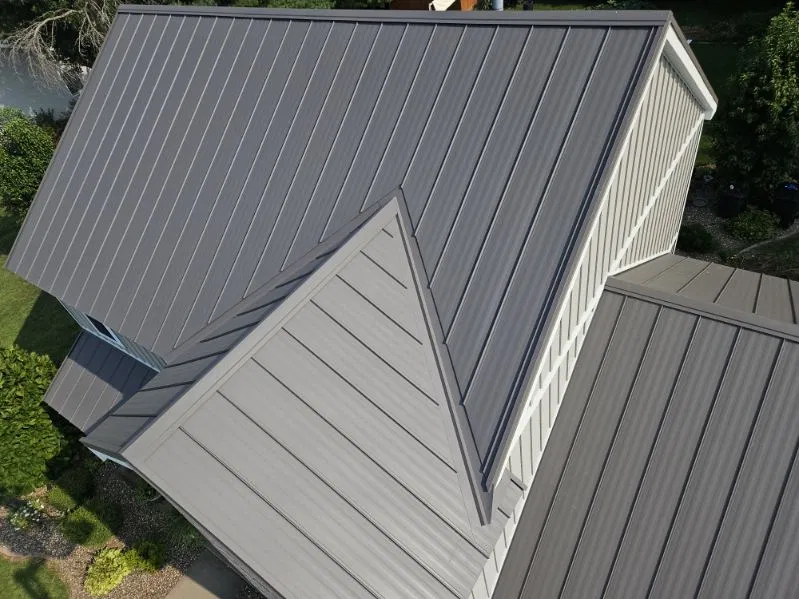
If you are reading this, you are probably weighing two or three local roofers and trying to figure out which one is actually going to show up and do the job right. Standing seam is the metal roof most homeowners in northeast Missouri end up wanting once they look into it, because the fasteners are hidden and the panels run clean and continuous from the ridge down to the eave. This page is the plain version of what a standing seam roof is, how we build one, and where it does and does not make sense.
The short version: a standing seam panel is a flat sheet of steel with raised legs folded up along each long edge, and the panels lock together at those legs. There are no screws staring up at the sky, and no rubber grommets drying out in the sun a decade from now. That is the whole reason this roof outlasts the alternatives — the parts that fail on every other metal roof simply are not exposed here.
How We Build a Standing Seam Roof, Step by Step
We start on the roof, not on the phone. The first visit is to measure the actual runs, read the pitch, count the valleys and penetrations, and check the deck. Every number that goes into the quote comes off your roof with a tape, not off a satellite guess.
Once the job is on the schedule, we bring a portable roll former and a coil of raw steel to your property. We form each panel right there, cutting it to the exact length of the run it is going on. Because the panel is made on site, it runs in one continuous piece from ridge to eave — no lap seam partway down the roof. That matters more than it sounds: a lap seam is a joint across a panel run, and joints across a run are where retrofit metal roofs leak.
We lay down solid underlayment, set the clip system, and lock each panel into the one beside it. The clips hold the panel down but let it slide a little as the steel expands and contracts with temperature — which is exactly what keeps the panels from oil-canning and the fasteners from working loose. We finish the ridge, the valleys, the gable trim, and any penetrations, and we walk the finished roof before we call it done.
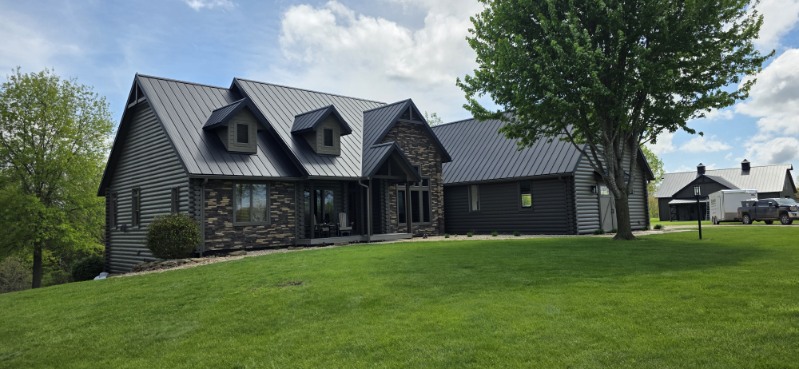
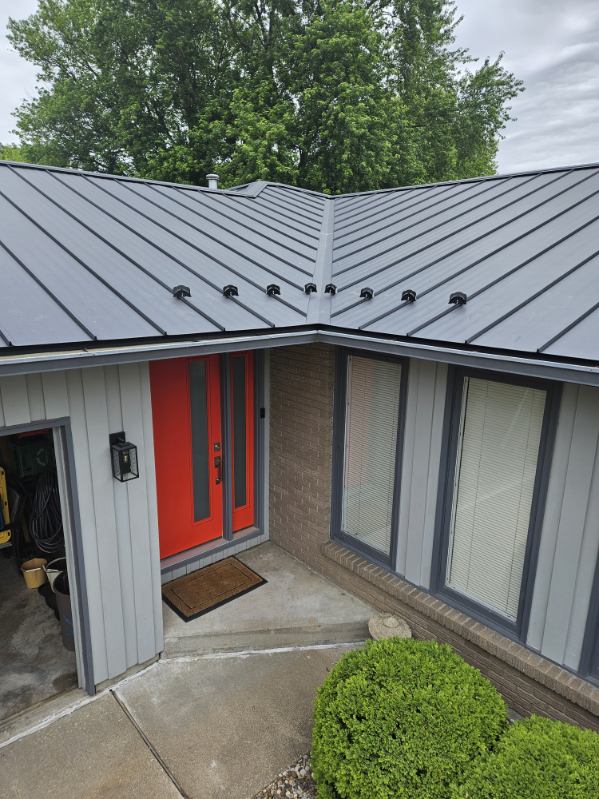
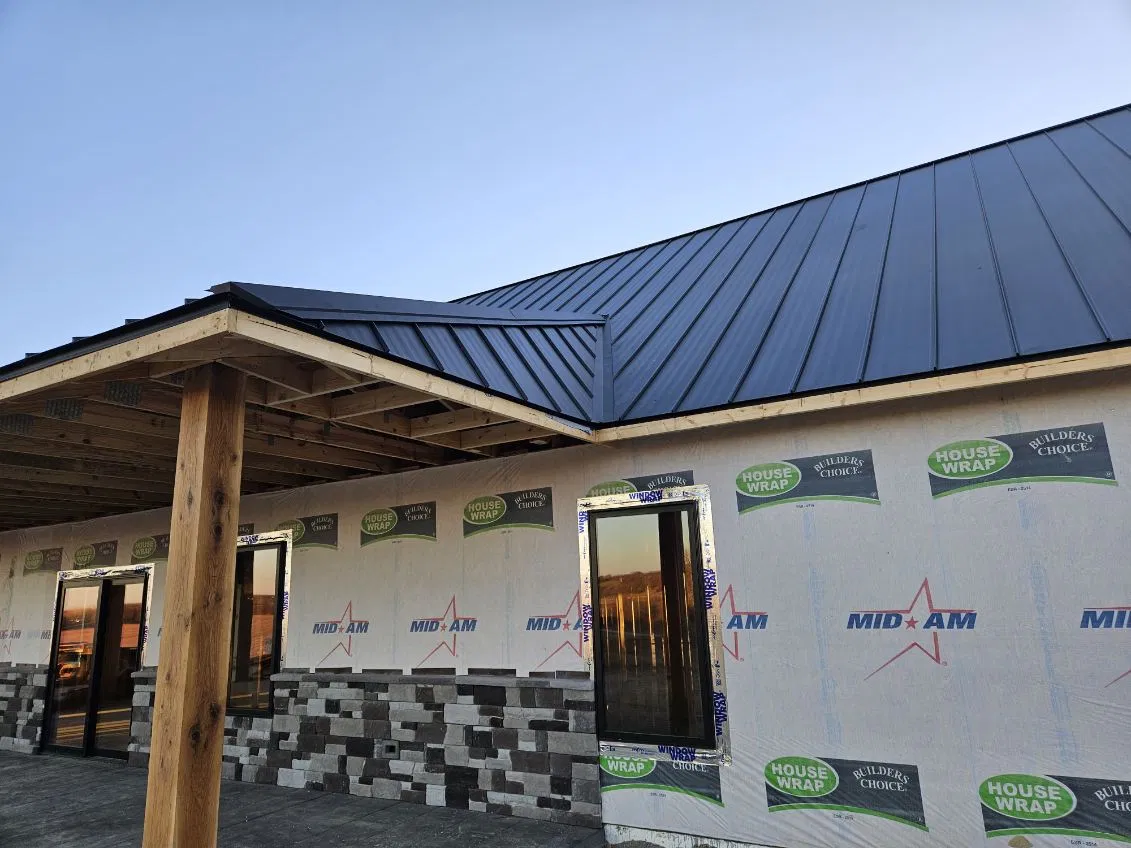
Roof first on a new build
Where Standing Seam Is the Right Answer
Standing seam is the right call for most homes and farm buildings in this part of Missouri. It handles the wind that pulls shingles off, sheds the heavy wet snow we get instead of holding it as dead weight, and does not lose granules or dry out in the sun. If you are putting a roof on a house you plan to keep, a standing seam roof is the one most people only have to put on once.
It is especially the right answer on longer runs and complicated rooflines — long rafter lengths, hip-and-valley roofs, places where a factory-ordered panel would have to be spliced across the run. Because we form on site, we make the panel the length the roof actually is, awkward angles included.
Where It Is Not
A standing seam roof is not the right product on a nearly flat roof. There is a minimum pitch below which even a good metal roof is not the answer, and if yours is there, we will tell you rather than sell you something that will not perform. It is also a long-term investment, so if you are selling the house inside a year, that is worth a plain conversation before you commit.
And if the deck is soft or rotten underneath, that has to be fixed first, before any roof — metal or otherwise — goes on. We find that out when we look at the roof, and we tell you before we start.
What Drives the Cost of a Standing Seam Roof
We do not quote a price on a website, because every roof is different and a number with no roof behind it is not honest. What actually moves the number up or down is the size and complexity of the roof, the number of valleys and penetrations (every pipe, vent, skylight, and chimney is detail work), the pitch, whether the old roof has to come off or we are going over one sound layer, the panel profile, and the trim.
The one thing that does not drive the cost is waiting on a factory. Because we form the panels on your property, there is no factory lead time built into the job. Once you are on the schedule, we bring the steel and the machine. For a full breakdown of how we quote, see What It Costs.
Standing Seam Roofing — Common Questions
What exactly makes it a 'standing seam' roof?
The seams — the raised legs along each long edge of the panel — stand up off the roof plane. The panels lock together at those legs, and the fasteners that hold the panel down are hidden under the seam. There are no exposed screw heads on the roof surface.
How is that different from the screw-down metal roofs I see on barns?
An exposed-fastener panel is screwed down through the face of the metal, with a rubber grommet under each screw head sealing the hole. That grommet is the weak point — it dries out, cracks, and the fastener backs out over time. Standing seam hides the fasteners inside the seam, so there is nothing exposed to the sun and weather to fail.
Why does a panel formed on site run ridge to eave with no seam?
We make each panel the exact length of the run it goes on, right there on your property. A factory-ordered panel comes in a fixed length, so on a long run it has to be spliced — two panels overlapped partway down the roof. That overlap is a lap seam, and lap seams are where retrofit metal roofs leak. Forming on site lets us skip it.
Do the panels make noise as they heat up and cool down?
Steel expands and contracts with temperature. A standing seam roof is attached with clips that let the panel slide a small amount as it moves, instead of being pinned rigid to the deck. That movement is by design — it keeps the panels from oil-canning and keeps the fasteners from working loose. Over a solid deck with underlayment and a finished attic below, it is not something you notice inside.
Can I pick the color?
Yes. The steel coil comes in a range of paint finishes, and we can show you the options when we come look at the roof. The color is baked on at the coil, not painted on after.
Where We Work
Based in Knox City, Missouri, we travel roughly a 50-mile radius across northeast Missouri. Standing Seam Metal Roofing is available throughout our service area.
Ready to talk about your roof?
Tell us about the roof and we'll come look at it. No pressure, no factory lead time.